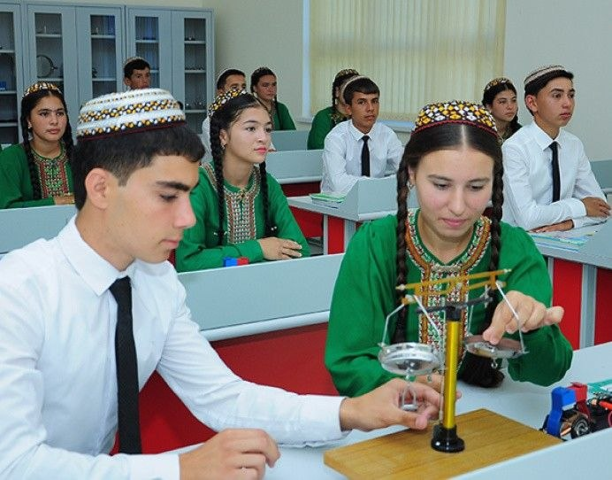
Instead of School — Cotton Fields and Pastures: Child Labour in Turkmenistan Is Becoming a Consequence of Poverty The new school year has only just begun in Turkmenistan, yet dozens of schoolchildren in Mary Region are reportedly already missing classes. According to Radio Azatlyk on 4 September 2026, the number of absent pupils has noticeably increased in Bayramaly, Turkmengala and Yoloten. Teachers report that in some schools between 30 and 50 children are missing classes, primarily pupils from the sixth grade upwards. The reason is particularly alarming: instead of attending school, children are working. Some are picking cotton, while others are herding livestock or performing other agricultural work. Parents explain that severe financial hardship is forcing families into this situation. The report cites a mother of five who could not afford school uniforms and supplies for all of her children and was able to send only two of them to school. According to her account, the family sought financial assistance but received none. This is no longer simply a question of school attendance. It is an issue of child labour, poverty and the State’s obligation to protect every child’s right to education. A child should not have to pay for a family’s poverty with their education When a family is forced to choose between sending a child to school and relying on that child to earn money, responsibility cannot simply be placed on the parents. We must ask why working parents are unable to provide for their families; why unemployed families do not receive adequate support; why the costs associated with schooling become unaffordable; and why a child ends up in a cotton field or on a pasture instead of in a classroom. The cotton harvest is of particular concern. Human rights defenders have for years raised concerns about the use of forced labour during Turkmenistan’s cotton harvest. If minors are forced to work, are mobilised under pressure from schools, state institutions, employers or other actors, or if their vulnerable circumstances are exploited to make them perform agricultural labour, such reports require immediate investigation. Child labour must not become the hidden price children pay for the country’s economic and social problems. Police intervention cannot replace social protection According to reports from Mary Region, schools inform the police when pupils are absent for prolonged periods. But children cannot be effectively returned to the classroom simply through warnings or pressure on their parents. If a household lacks sufficient income, employment, food, clothing or money for school supplies, the family primarily needs social assistance, while the child must be guaranteed a genuine opportunity to continue their education. The State must identify the reasons behind each child’s absence, provide meaningful assistance to low-income families and ensure that schoolchildren are not engaged in work that interferes with their education or threatens their health and development. Cases of forced and child labour can be reported to the ILO In a previous response to the Human Rights Platform of the Civil Movement “Dayanch” / Turkmenistan, information was provided about the International Labour Organization (ILO) complaints mechanism operating in Turkmenistan. The mechanism can be used to report cases of forced and child labour during the cotton harvest, as well as other violations of workers’ rights. Reports and complaints can be submitted through the following channels: Email: teswir@ilo.org Telephone calls or messages: +993 71 659970 In person or by post: ILO Office, UN House, 21 Archabil Avenue, Ashgabat, Turkmenistan We encourage citizens who have information about children or adults being subjected to forced labour to report such cases. Where it can be done safely, it is important to document the date, location, type of work, circumstances under which the person was made to work, and the institution or individuals responsible for the demand, without exposing the child or complainant to additional risk. A school must remain a place of education A child’s right to education must not depend on their parents’ income. When a schoolchild is picking cotton instead of attending lessons, or has to herd livestock so that their family can survive, this is not merely a sign of hardship within one household. It is evidence of a much deeper socio-economic crisis. Poverty, unemployment, low incomes, inadequate social protection and child labour are interconnected. The responsibility of the State is not to punish impoverished families because their children are absent from school. It is to create conditions in which no child is forced to choose between a textbook and earning money to survive.
As a foundation, every individual's fundamental
protect and develop their rights
we are working for.