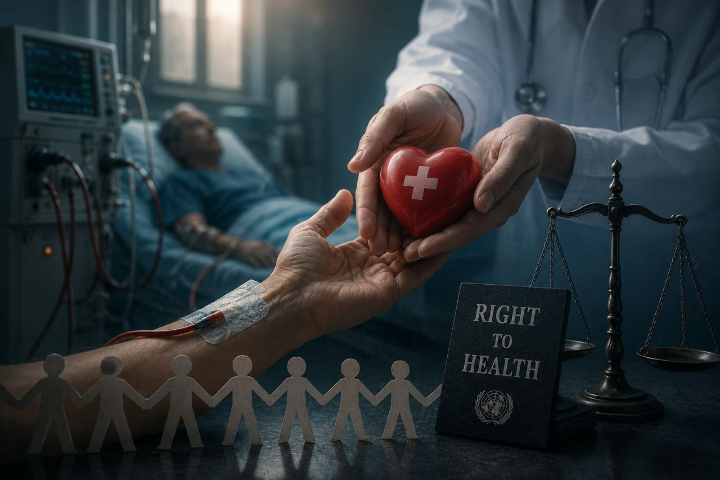
When Life Becomes a Commodity: Corruption in Turkmenistan’s Ministry of Health Is Costing Lives The authorities of Turkmenistan continue to portray the country’s healthcare system as a success story, highlighting the construction of modern medical facilities and claiming to prioritize the well-being of the population. Behind this official narrative, however, lies a very different reality — one in which access to life-saving medical care increasingly depends not on the severity of a patient’s illness, but on their ability to pay bribes. A recent investigation published by the independent media outlet Turkmen.news describes numerous allegations of corruption, bureaucratic obstruction, and systemic negligence within the Ministry of Health and Medical Industry of Turkmenistan. If these allegations are accurate, they point not to isolated incidents but to a system that may be putting human lives at risk. The situation is particularly alarming for patients suffering from end-stage kidney disease. Since kidney transplantation is not performed in Turkmenistan, many patients have no choice but to seek treatment abroad. However, to obtain foreign currency at the official exchange rate to pay for medical treatment, patients must first receive authorization from the Ministry of Health through a lengthy and complicated approval process. According to Turkmen.news, patients and their families often wait for years for this authorization. The publication cites sources alleging that certain senior officials demand approximately USD 5,000 in exchange for signing the required documents. For most families in Turkmenistan, such an amount is simply unaffordable, especially after prolonged medical expenses and the loss of income caused by serious illness. The most tragic aspect is that life-threatening diseases do not wait for bureaucratic procedures to be completed. While paperwork remains stalled for months, patients continue fighting for their lives. According to the publication’s sources, many people reportedly died before receiving the necessary authorization to undergo treatment abroad. The situation within the domestic healthcare system is equally concerning. In Dashoguz Province, where environmental conditions have reportedly contributed to a high incidence of kidney disease, there is only one dialysis center serving the entire region. Fourteen dialysis machines can treat only a limited number of patients each day, while the actual demand is significantly higher. Patients reportedly arrive before dawn to secure a place in line, and some sources allege that bribes are required even to gain access to life-sustaining dialysis treatment. The investigation also raises serious concerns about shortages of medical equipment, laboratory supplies, diagnostic devices, and essential medicines. According to the reported information, regional hospitals regularly submit requests to the Ministry of Health for additional equipment and resources, but many of these requests allegedly go unanswered. Furthermore, the publication contains serious allegations concerning possible irregularities in the procurement of medicines and medical equipment through public funds. These claims warrant an independent, impartial, and transparent investigation by the competent authorities. If substantiated, these allegations would constitute not only corruption but also potential violations of the right to life and the right to the highest attainable standard of health, as guaranteed under the Universal Declaration of Human Rights, the International Covenant on Economic, Social and Cultural Rights, and other international human rights instruments. Particularly troubling are the allegations that senior officials who have held high-ranking positions within the Ministry for many years and received state honors are simultaneously implicated in schemes involving life-saving medical treatment. Such allegations should not be ignored but should instead be subjected to a prompt, transparent, and independent investigation. Corruption in healthcare is not merely a financial crime. When patients are denied access to essential medical care because of bribery, artificial administrative barriers, or the absence of necessary medical resources, the consequences are measured not in money but in human lives. We call on: the authorities of Turkmenistan to conduct an independent, transparent, and impartial investigation into all allegations presented in the Turkmen.news report; ensure equal access to healthcare without corruption or discrimination; guarantee that patients requiring treatment abroad receive timely authorization and are not subjected to unlawful financial demands; carry out an independent audit of the procurement system for medical equipment and pharmaceuticals; ensure that healthcare institutions are adequately supplied with modern medical equipment, essential medicines, laboratory materials, and qualified personnel; the World Health Organization (WHO), relevant United Nations mechanisms, and Turkmenistan’s international partners to pay close attention to the condition of the country's healthcare system and to allegations of corruption that may endanger patients' lives. The right to life must never depend on the payment of a bribe. The State has a legal and moral obligation to protect its citizens—not to turn their suffering and desperation into a source of illicit profit. As long as the healthcare system remains closed to independent public oversight and meaningful accountability is absent, there remains a serious risk that more patients will lose precious time—and ultimately their lives—while waiting for justice and access to the treatment they urgently need.
As a foundation, every individual's fundamental
protect and develop their rights
we are working for.