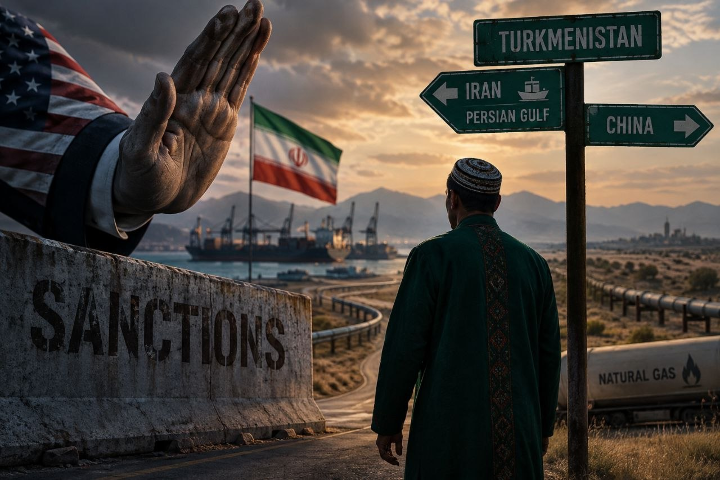
U.S. Sanctions on Iran Put Turkmenistan in a Difficult Position The tightening of U.S. sanctions pressure on Iran could create serious economic and strategic challenges for Turkmenistan. Washington is effectively forcing Tehran’s partners to make a choice: continue cooperation with Iran or risk access to the U.S. financial system. For Turkmenistan, this issue is particularly sensitive. Among all Central Asian states, Ashgabat has some of the closest economic ties with Iran. Bilateral trade is estimated at approximately $600 million, while the shared land border makes Iran not merely a trading partner but also one of Turkmenistan’s most important southern transport routes. Food products, textiles, petrochemicals and construction materials cross the border. However, energy cooperation is considerably more important. For Turkmenistan, which possesses vast natural gas reserves, diversifying gas exports remains a strategic priority. The country continues to depend heavily on the Chinese market. Iran provides opportunities for swap arrangements and potentially opens access to new markets and transport routes to the south. This is precisely where U.S. sanctions pressure becomes particularly problematic. Even if Ashgabat describes certain gas operations as technical transit or swap arrangements, sanctions risks may still affect banks, transport companies, insurance, payments and other related services. International financial institutions often begin avoiding transactions even before they are explicitly prohibited, fearing exposure to U.S. secondary sanctions. As a result, Turkmenistan risks finding itself caught between two strategic interests: the need to preserve relations with Iran and the desire to maintain access to Western financial and economic opportunities. There is also a broader geographical dimension. Turkmenistan is a landlocked country. Iran is therefore not only a neighbour but also one of its natural routes to the ports of the Persian Gulf. Restrictions affecting this corridor could further deepen the country’s geographical and economic isolation. This is particularly concerning against the backdrop of Turkmenistan’s domestic economic difficulties, high levels of labour migration, limited economic opportunities for the population, and the continued dependence of state revenues on energy exports. Under such conditions, any reduction in foreign trade routes may ultimately affect not only state projects but ordinary citizens as well. Other Central Asian countries are also likely to face pressure. Iran is becoming an increasingly significant trading partner for Tajikistan; Kazakhstan is interested in transport routes through Iran to the Persian Gulf; Uzbekistan faces potential banking-related risks; and Kazakhstan and Kyrgyzstan must also take into account the Eurasian Economic Union’s free trade agreement with Iran. For Turkmenistan, however, the issue carries particular weight because of the shared border, energy cooperation and the country’s need to develop alternative routes for gas exports. A complete break between Ashgabat and Tehran appears unlikely. A more probable scenario would involve tighter banking controls, greater caution in financial transactions and attempts to preserve forms of trade and transit that do not create direct sanctions exposure. Yet the space for Turkmenistan’s traditional policy of neutrality and careful balancing is becoming increasingly narrow. Turkmenistan now faces an uncomfortable reality: geography requires cooperation with Iran, energy interests require new export routes, China remains the key market for Turkmen gas, while U.S. sanctions increasingly restrict Ashgabat’s room for manoeuvre. And once again, the central question remains: what price will the citizens of Turkmenistan ultimately be forced to pay for the state’s foreign policy and economic decisions?
As a foundation, every individual's fundamental
protect and develop their rights
we are working for.