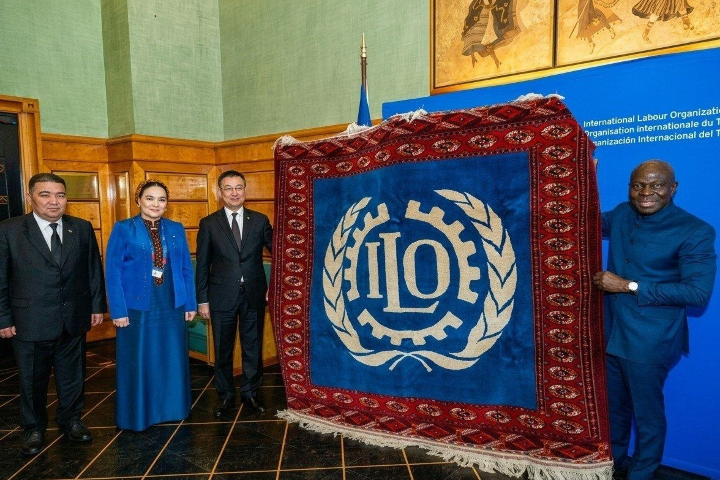
Turkmenistan’s Cotton Sector Between Reforms and Reality: What the ILO Monitoring Report for 2025 Revealed In June 2026, the results of the International Labour Organization (ILO) monitoring mission on the 2025 cotton harvest in Turkmenistan were published. The report covers all five regions of the country and is based on extensive field research, including interviews with cotton pickers, farmers, employees of public institutions, representatives of farmers’ associations, and local authorities. Despite official statements about ongoing reforms and cooperation with international organizations, the findings of the monitoring mission raise serious concerns. The report demonstrates that many of the issues highlighted for years by human rights defenders, independent journalists, and international organizations continue to exist and, in several areas, remain systemic. Source: https://turkmen.news/2026/06/05/mot-v-2025-godu-vyroslo-chislo-detey-na-hlopkovyh-polyah-turkmenistana-chinovniki-chashe-meshali-monitoringu/ --- The Increase in the Presence of Children in Cotton Fields One of the most alarming findings of the monitoring report is the increase in the presence of children during the cotton harvest. This occurred despite the fact that the authorities of Turkmenistan previously included cotton cultivation and harvesting in the list of hazardous occupations prohibited for individuals under the age of eighteen. However, the monitoring results indicate the opposite trend. Among adult cotton pickers, reports of children being present in the fields increased from 11 percent in 2024 to 20 percent in 2025. Among employees of public institutions and state enterprises, the figure increased from 14 percent to 18 percent. Among farmers and agricultural producers, the increase was even more significant, rising from 17 percent to 34 percent. Most importantly, these are not merely subjective perceptions. ILO observers themselves documented the presence of children during 38 percent of field visits. In 2024, this figure was 23 percent. The most concerning situation was recorded in Dashoguz Region, where children were present on 59 percent of the fields visited by monitors. These findings indicate that the problem of child labor in Turkmenistan’s cotton sector remains far from resolved. --- Public Sector Employees Continue to Participate in the Cotton Harvest Despite official claims that participation in cotton harvesting is voluntary, the monitoring report indicates that employees of public institutions continue to take part in the harvest campaign. According to the ILO findings, 12 percent of employees of public institutions and enterprises reported that they personally participated in cotton picking during the 2025 season. Approximately 20 percent of those respondents stated that they had been sent to the fields by local authorities, institutional management, employers, or representatives of farmers’ associations. Although the report’s authors carefully note that participation alone does not automatically prove coercion, other indicators suggest that many workers perceive participation in the cotton harvest as an obligation, the refusal of which may result in negative consequences. --- Refusal to Participate May Lead to Punishment To assess the degree of coercion, monitors examined the consequences people feared if they refused to work in the cotton fields. Fifteen percent of cotton pickers reported that refusing to participate could result in at least one negative consequence. The most common concerns included: Loss of respect within the community; Loss of social benefits; Concerns for personal safety; Loss of employment; Reduction of wages; Reduction of working hours; Deterioration of relations with supervisors and management. Among public sector employees, the level of concern was even higher. Nearly one in four public sector workers, or 23 percent, expected negative consequences if they refused to participate in the cotton harvest. These figures call into question the true voluntariness of participation for a significant number of workers. --- Financial Extortion Remains Part of the System One of the most revealing findings of the monitoring mission is the continued practice of financial collections. According to the report, 12 percent of respondents stated that they were involved in making payments in order to avoid working in the cotton fields or to pay for a replacement worker. Such practices were documented in every region of Turkmenistan. However, the problem extends far beyond the cotton harvest. For many years, employees of public institutions have been subjected to a system of so-called “voluntary contributions.” Teachers, healthcare workers, kindergarten staff, utility workers, and other public employees are regularly pressured to contribute money for: Seeds; Books; Repairs; Beautification projects; Public celebrations; Government campaigns; Gifts; Mandatory subscriptions; Various local initiatives and activities. Formally, these payments are often described as voluntary. In practice, many employees understand that refusing to contribute may lead to pressure from management, loss of bonuses, reduced working hours, or other negative consequences. Therefore, paying money to avoid participation in the cotton harvest should be understood as part of a broader system of economic pressure imposed on public sector workers. --- Officials Increasingly Interfere with Monitoring Activities Another deeply troubling finding is the increase in interference by government officials in the work of ILO observers. In 2025, officials were more frequently present during interviews, monitored conversations with workers, and restricted access to potential respondents. According to the monitoring report: Interference was documented during 35 percent of field visits; Interference occurred during 34 percent of visits to public institutions and enterprises. In Dashoguz Region, interference was recorded in 62 percent of interactions between monitors and public sector employees. Such actions inevitably affect the willingness of people to speak openly about violations and hinder the collection of objective information. --- Working Conditions Continue to Raise Concerns Despite certain improvements, working conditions during the cotton harvest remain below international labor standards. Manual labor was used in nearly 93 percent of farms during the first harvest period. More than half of the workers did not receive at least one essential item of personal protective equipment, including: Gloves; Protective masks; Protective aprons. Only one quarter of the fields visited by observers had first-aid kits available. Eleven percent of workers reported health problems related to their work. The average working day lasted 7.96 hours, while 13 percent of workers reported working more than nine hours per day. --- Farmers Also Face Significant Pressure The monitoring report demonstrates that farmers are also subjected to serious economic pressure. The state procurement system continues to play a central role in the organization of the cotton sector. Failure to meet production targets may result in: Accumulation of debt; Financial losses; Restricted access to resources; Difficulties obtaining seeds and fertilizers; Reduction of land lease terms; Refusal to renew land lease agreements. According to the report, 86 percent of surveyed farmers expected at least one negative consequence if they failed to fulfill state procurement requirements. Forty-five percent identified debt accumulation as the most likely consequence. --- International Investment and Corporate Responsibility Against the backdrop of these findings, continued international cooperation with Turkmenistan’s textile sector deserves particular attention. According to Progress.online, the Italian Association of Textile Machinery Manufacturers (ACIMIT) reported that its member companies supplied textile equipment worth approximately €13 million to Turkmen entities in 2023 alone. At the same time, Ashgabat continues to host international exhibitions and investment events promoting the development of the textile industry. Source: Progress.online Source: Orient https://orient.tm/ International economic cooperation can certainly contribute to modernization and economic growth. However, an important question remains: Can investment and trade be separated from concerns regarding human rights? When the International Labour Organization itself continues to document indicators of forced labor, the involvement of public sector employees, and the growing presence of children in cotton fields, questions regarding the responsibility of international partners become increasingly important. --- The Carpet Presented to the ILO and Difficult Questions Particular public attention was drawn to photographs showing representatives of Turkmenistan meeting with officials of the International Labour Organization. The published images show the Turkmen delegation presenting a large traditional Turkmen carpet bearing the ILO emblem to the leadership of the organization. We fully respect the work of the International Labour Organization and recognize its important role in protecting workers’ rights worldwide. However, such symbolic gestures raise serious questions. The ILO’s own report describes forced labor during the cotton harvest as a systemic problem supported by state mechanisms. At the same time, the Government of Turkmenistan has not publicly acknowledged the full scale of this problem. Against this backdrop, the presentation of symbolic gifts to international organizations appears premature. The issue is not the carpet itself. The issue is the message such gestures send to thousands of people who continue to experience labor rights violations. Citizens of Turkmenistan expect international organizations to prioritize the protection of human rights, transparent monitoring, principled engagement, and effective mechanisms for assisting victims of abuse. As long as forced labor, child labor, pressure on workers, and restrictions on independent monitoring continue to be documented, such symbolic ceremonies will inevitably raise concerns within civil society. The photograph of the carpet presentation was sourced from Progress.online. --- Proposals Submitted by the Human Rights Platform of the Civic Movement “Dayanch” The Human Rights Platform of the Civic Movement “Dayanch” has submitted proposals to the International Labour Organization aimed at improving the monitoring of labor rights in Turkmenistan. One of the key proposals is the inclusion of independent human rights organizations in monitoring and assessment activities. We believe that without the participation of independent civil society organizations, it is impossible to obtain a complete and objective picture of the situation on the ground. We have also proposed the creation of secure and confidential hotlines for citizens of Turkmenistan. Such mechanisms should allow people to safely report: Forced labor; Child labor; Pressure from employers; Financial extortion; Threats of dismissal; Violations of labor rights; Abuses committed by government officials. Without protected reporting channels and guarantees of safety for whistleblowers, even the largest international programs risk failing to achieve their primary purpose. Millions of euros, roadmaps, technical assistance projects, and international agreements cannot replace a worker’s ability to safely report violations of their rights. --- The Central Problem: Lack of Protection for Those Who Speak Out The fundamental problem in Turkmenistan is not limited to shortcomings in legislation. The central issue is the absence of a safe environment for individuals who wish to report violations. People fear dismissal, intimidation, retaliation, and other consequences. As a result, many violations never appear in official statistics. Without genuine protection for complainants and whistleblowers, reforms risk becoming little more than impressive reports on paper. --- Conclusion The ILO monitoring report for 2025 presents a mixed picture. While certain legislative changes have been introduced and cooperation with international organizations continues, significant concerns remain. The growing presence of children in cotton fields, the continued participation of public sector employees in the harvest, financial extortion, pressure on workers, interference with monitoring activities, and ongoing shortcomings in working conditions demonstrate that substantial challenges persist. Addressing these issues requires more than legislative amendments. It requires genuine participation by independent civil society organizations, transparent monitoring, protection for whistleblowers, and the establishment of secure mechanisms for reporting abuses. Only under such conditions can meaningful progress be achieved in protecting workers’ rights and eliminating forced labor in Turkmenistan. --- Sources Turkmen.News https://turkmen.news/2026/06/05/mot-v-2025-godu-vyroslo-chislo-detey-na-hlopkovyh-polyah-turkmenistana-chinovniki-chashe-meshali-monitoringu/ International Labour Organization (ILO) https://www.ilo.org/ Progress.online https://progress.online/ Orient https://orient.tm/ The photograph depicting the presentation of the carpet to the International Labour Organization was sourced from Progress.online.
As a foundation, every individual's fundamental
protect and develop their rights
we are working for.