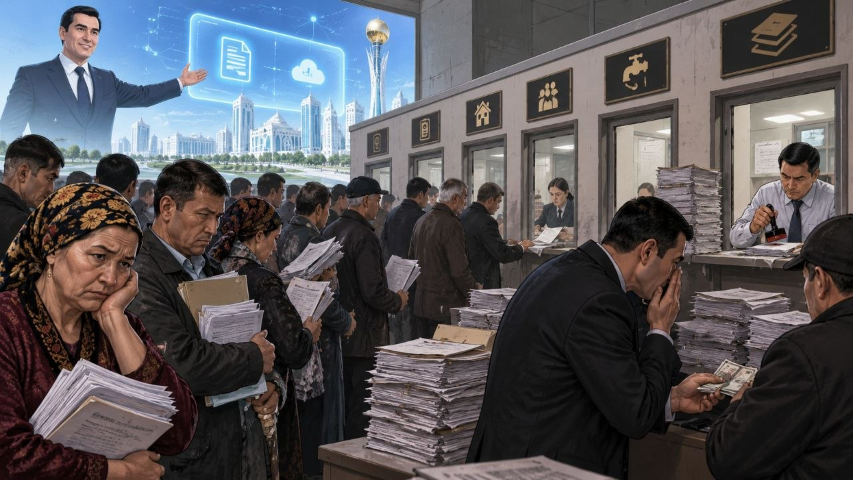
Turkmenistan: Digitalization on Paper, Bureaucracy in Real Life Turkmen authorities regularly speak about digitalization, electronic technologies, and the modernization of public services. Yet for ordinary citizens, the state still looks less like a digital system of the 21st century and more like an endless corridor of offices, certificates, signatures, stamps, and queues. A publication by the independent outlet Nikatm, using real estate transactions as an example, illustrates the scale of the problem. To sell an apartment, register or deregister a place of residence, a person must personally visit numerous state institutions, collect a large number of documents, and adjust to highly restricted office hours. There is no online appointment system. Many documents cannot be obtained remotely. Even possession of all the main documents does not spare a person from having to obtain additional certificates and visit further institutions. As a result, a parallel system has emerged: intermediaries who, for money, perform tasks that citizens in a properly functioning state should be able to complete independently, quickly, and transparently. According to the publication, preparing documents for a real estate sale may cost around 3,000 manats, while restoring missing documents or dealing with complications can raise the cost to as much as 10,000 manats. The article also refers to so-called “tips” that intermediaries allegedly pass on in order to speed up administrative procedures. This is where the lack of genuine digitalization stops being merely a matter of convenience. It becomes a human rights issue. When a citizen cannot manage their own property, obtain a certificate, register their place of residence, or complete an administrative procedure without intermediaries, this affects property rights, equal access to public services, legal certainty, and protection from corrupt practices. People with low incomes, elderly citizens, persons with disabilities, residents of the regions, and families whose members live abroad are particularly vulnerable. For them, a complicated bureaucratic procedure means not only days lost in queues, but also expenses they may simply be unable to afford. The reaction of readers to the publication is also revealing. In the comments, people link the preservation of the cumbersome paper-based system to corruption and to the interests of certain officials and institutions in maintaining the existing order. Such comments are not, in themselves, proof of specific acts of corruption, but they clearly demonstrate an extremely low level of public trust in state procedures. Real digitalization is not about official speeches on technology. It means being able to submit an application online. To track its status. To receive documents electronically. To pay official state fees transparently. To know the exact processing deadline. To appeal a refusal. And, most importantly, not to have to look for someone who can “solve the issue” for money. Until such mechanisms exist, claims about the successful digitalization of Turkmenistan will remain exactly what more and more citizens perceive them to be: digitalization on paper. Meanwhile, paper-based bureaucracy continues to cost people their time, their money, and their right to access the services of their own state in a normal and dignified manner.
As a foundation, every individual's fundamental
protect and develop their rights
we are working for.