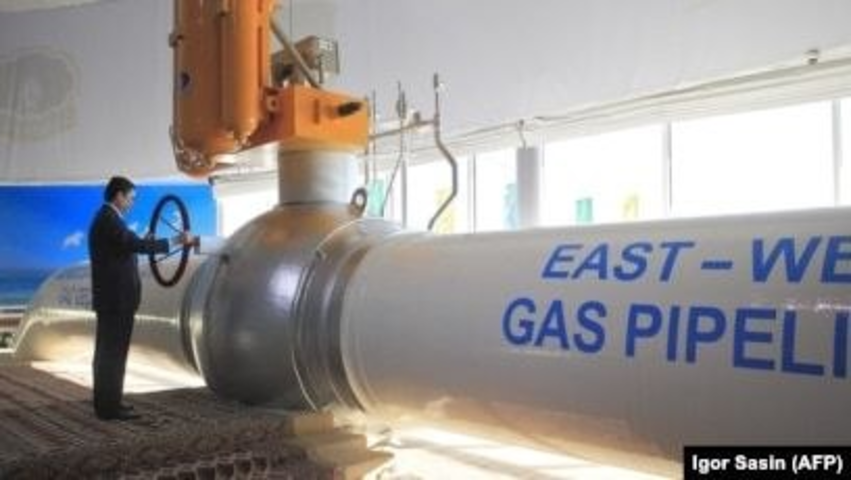
The Trans-Caspian Pipeline: Can a Major Energy Project Overcome Human Rights Concerns, Corruption, and Lack of Transparency in Turkmenistan? Against the backdrop of the conflict involving Iran, which has disrupted traditional energy supply routes, and the European Union’s efforts to reduce dependence on Russian transit networks, the Trans-Caspian Pipeline has once again become a focus of international diplomacy, energy policy, and investment discussions. According to the analytical article “Can the Dream of the Trans-Caspian Pipeline Be Revived?” published by Azattyq Asia on June 11, 2026, interest in the project has significantly increased following the Baku Energy Week and a series of diplomatic contacts involving the United States, Turkey, Azerbaijan, and Turkmenistan. The project envisions the construction of a pipeline across the Caspian Sea connecting Turkmenistan and Azerbaijan, with further integration into the Southern Gas Corridor that already links Azerbaijan, Turkey, and European markets. For many Western countries, this route is viewed as an opportunity to strengthen Europe’s energy security, diversify gas supplies, and reduce reliance on existing transit routes. However, any discussion of the pipeline’s prospects must also address a broader context that includes human rights, transparency, governance, investment risks, and the rule of law in Turkmenistan. Source: Azattyq Asia / Radio Azattyq https://www.azattyqasia.org/a/mozhno-li-vozrodit-mechtu-o-transkaspiyskom-truboprovode/33777599.html Photos used in this article were taken from the above source. --- Geopolitics Versus Reality The Trans-Caspian Pipeline has been under discussion for more than two decades. The original concept was developed in the late 1990s with support from the United States. It envisioned the annual delivery of up to 30 billion cubic meters of Turkmen natural gas directly to European markets through Azerbaijan and Turkey. The project has repeatedly faced major obstacles, including: Opposition from Russia and Iran; Lack of long-term commitments from Western partners; High construction costs; Turkmenistan’s increasing orientation toward the Chinese market; Regional political uncertainty. Today, the situation is changing once again. The instability surrounding Iran, turbulence in global energy markets, and Europe’s search for alternative suppliers have returned the project to the international agenda. Yet several critical issues remain largely absent from official discussions. --- Human Rights as a Factor in Investment Security Energy policy and human rights are often treated as separate issues. In reality, they are closely connected. Any international infrastructure project worth billions of dollars requires a predictable legal environment, transparency, independent courts, and effective investment protection mechanisms. In Turkmenistan, these very issues remain a source of concern. For years, international human rights organizations have documented: Restrictions on freedom of expression; The absence of independent media; Persecution of civil activists; Severe limitations on civil society activities; Lack of access to independent justice; The absence of an independent judiciary; Pressure on relatives of government critics; Transnational repression targeting Turkmen citizens abroad. Under such conditions, an important question arises: how would disputes involving investors, contractors, and state institutions be resolved? For international businesses, this is not merely a political issue—it is a fundamental investment risk. --- Lack of Transparency as an Investment Challenge Turkmenistan remains one of the most closed countries in the world. Independent journalists have extremely limited opportunities to operate within the country. International observers face significant restrictions. Many official statistics cannot be independently verified. For international investors, this creates serious difficulties when assessing: Actual gas production volumes; Infrastructure conditions; Economic performance; Project feasibility; Labor market realities; Environmental risks. Investors generally prefer transparent environments where information can be independently verified. The lower the level of transparency, the greater the level of uncertainty and investment risk. --- Corruption and the Absence of Public Oversight Corruption remains one of the most significant concerns. Large-scale infrastructure projects require transparent procurement procedures, independent audits, and effective public oversight. In Turkmenistan, independent media outlets capable of investigating corruption allegations are virtually absent. Likewise, there are limited opportunities for independent public monitoring of state-funded mega-projects. For investors, this increases both financial and reputational risks. Corruption scandals can significantly raise project costs, undermine contractual obligations, and discourage future investment. --- Multiple Exchange Rates and Economic Opacity Another challenge is the long-standing gap between the official exchange rate and the unofficial market rate of the national currency. For years, economists, analysts, and independent observers have pointed to the existence of multiple exchange rates and restrictions on currency convertibility. For international companies, this creates complications related to: Project cost calculations; Profit repatriation; Financial planning; Long-term investment forecasting. Economic opacity inevitably affects investor confidence and increases uncertainty. --- Labor Rights and Large Infrastructure Projects Labor rights represent another critical issue. Experience from major infrastructure projects worldwide demonstrates that workers often become the most vulnerable stakeholders when oversight mechanisms are weak. If the Trans-Caspian Pipeline proceeds, important questions will arise: Are workplace safety standards being respected? Are workers receiving fair compensation? Are protections against labor exploitation in place? Can employees safely report violations? At present, independent trade unions are effectively absent in Turkmenistan. Workers have limited access to genuinely independent institutions capable of defending their rights. --- Lack of Safe Reporting Mechanisms In many countries, major international projects are accompanied by: Independent complaint mechanisms; Anti-corruption hotlines; Whistleblower protection systems; Public monitoring bodies. These mechanisms allow individuals to report corruption, labor violations, safety concerns, and environmental problems without fear of retaliation. Independent and secure reporting systems of this nature are largely absent in Turkmenistan. This creates additional risks for workers, communities, investors, and international partners. --- Transnational Repression and International Reputation International human rights organizations have also expressed concern over documented cases of transnational repression involving Turkmen citizens. Recent years have seen reports of: Deportations of civil activists; Enforced disappearances; Pressure on family members of activists and human rights defenders; Misuse of international law enforcement mechanisms. Such practices inevitably affect the country’s international reputation and may influence how investors and financial institutions assess political risk. --- An Opportunity for Reform Despite the challenges, the Trans-Caspian Pipeline remains one of the most potentially significant energy projects in the region. It could generate substantial economic benefits for Turkmenistan, Azerbaijan, Turkey, and European consumers. However, the long-term success of such a project depends on more than gas reserves and political agreements. It also requires: Rule of law; Judicial independence; Government transparency; Anti-corruption measures; Protection of labor rights; Freedom of expression; A functioning civil society; Compliance with international human rights obligations. Energy security and human rights should not be viewed as competing priorities. On the contrary, respect for human dignity, transparency, accountability, and independent institutions forms the foundation of sustainable economic development and long-term international cooperation. The future of the Trans-Caspian Pipeline will depend not only on negotiations between Washington, Brussels, Ankara, Baku, and Ashgabat. It will also depend on whether the region can provide both investors and its own citizens with what every successful international project ultimately requires: predictability, transparency, justice, accountability, and respect for human rights. --- Source: Azattyq Asia / Radio Azattyq Article: “Can the Dream of the Trans-Caspian Pipeline Be Revived?” https://www.azattyqasia.org/a/mozhno-li-vozrodit-mechtu-o-transkaspiyskom-truboprovode/33777599.html Photos used in this publication were taken from the above source.
As a foundation, every individual's fundamental
protect and develop their rights
we are working for.