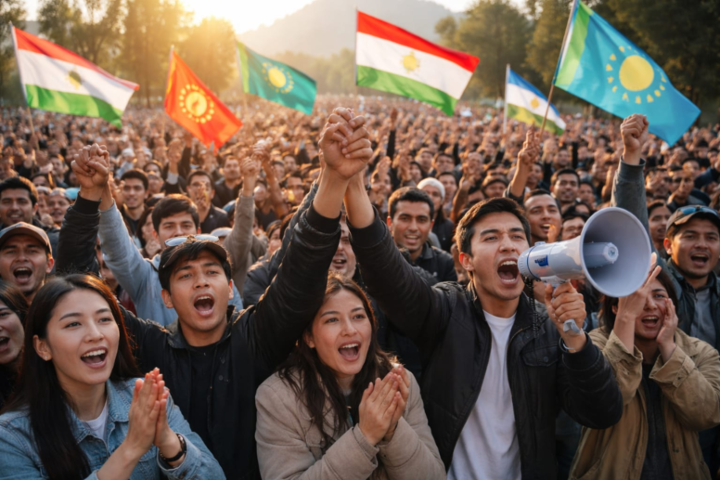
In recent days, important events have taken place in Central Asia that clearly demonstrate what civil society is and what real power public solidarity holds. These events are important not only for the citizens of those countries but also for the citizens of Turkmenistan, because they show a simple but crucial truth: when people do not remain silent and support one another, they become a force capable of changing reality. In Kazakhstan, a strong public reaction followed the story of a young man named Alibek Karatay, who worked as a cook at a Burger King restaurant. Despite working honestly for several years, after a change in management, he was reportedly subjected to bullying and psychological pressure, which forced him to leave his job. His mother shared his story on social media. This story could have remained unnoticed, as many others do, but something different happened. People did not remain indifferent. Thousands of citizens began sharing the information, expressing support, asking questions, and demanding justice. The story gained wide public attention. As a result, the company was forced to respond, personnel decisions were made, and the Ministry of Labor and state labor inspectors launched an official investigation. Government authorities took the situation under control. All of this happened because of public solidarity. In Tajikistan, another important example took place. For several years, criminal liability existed for likes, comments, and reactions on social media. Hundreds of people were prosecuted under these provisions. However, this practice faced strong criticism from society and human rights defenders. As a result, the authorities were forced to reconsider their approach. Instructions were given to refrain from opening criminal cases for such actions, and legislative changes were introduced. This became possible because of public attention, criticism, and the pressure of civil society. These examples clearly show what civil society is. Civil society is the citizens themselves. It is people who do not remain indifferent to injustice. It is people who support one another, spread the truth, and demand justice. Solidarity creates public resonance. Public resonance means that a problem becomes visible, known, and impossible to ignore. When one person speaks alone, they may not be heard. But when society speaks together, it becomes a force. Solidarity compels companies, officials, and authorities to respond. Solidarity protects human dignity. Solidarity is the foundation of civil society. It is important for the citizens of Turkmenistan to understand that civil society begins with each individual. It begins with support, with solidarity, and with the courage not to remain silent. When people support one another, they are no longer alone. They become a society. And society is a force capable of protecting rights, dignity, and the future. The Human Rights Platform of the Civic Movement “DAYANÇ / Turkmenistan” emphasizes that solidarity and public resonance are among the most powerful tools for protecting human rights. Unity creates justice. Unity creates protection. Unity creates strength. Source: Current Time Asia https://www.youtube.com/live/RCFeOAOuVOE?si=8QaQK5Hqxwu_r6qu
As a foundation, every individual's fundamental
protect and develop their rights
we are working for.