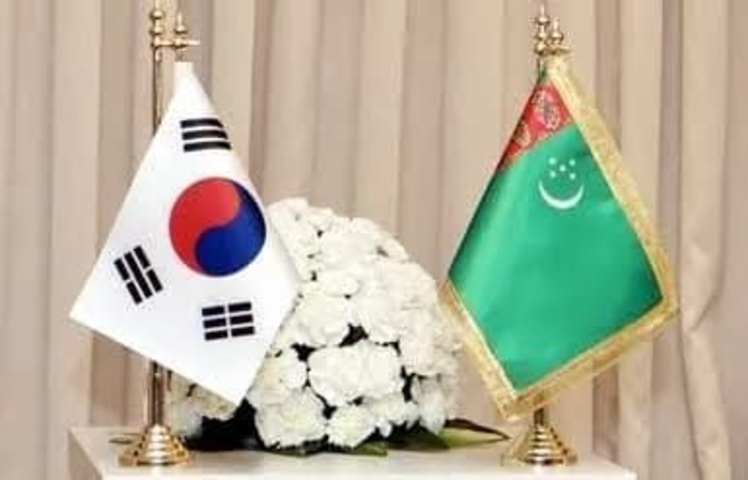
Seoul Must Not Turn a Blind Eye to Human Rights for the Sake of New Agreements with Turkmenistan An Appeal to the President of the Republic of Korea, the Government, the National Assembly, and Korean Society Ahead of the “Central Asia–Republic of Korea” Summit On 16 September, Seoul is expected to host the first summit in the “Central Asia–Republic of Korea” format. President of Turkmenistan Serdar Berdimuhamedov is expected to take part in the meeting, while a number of interstate, intergovernmental, and interagency agreements are reportedly being prepared for signature during his visit. Official Ashgabat speaks about the economy, investment, logistics, the chemical industry, infrastructure, construction, water management, science, and education. Dozens of agreements have already been signed between Turkmenistan and the Republic of Korea, major projects have been implemented, and further expansion of cooperation is now being discussed. But there is one question that must not remain outside the negotiating room: With whom exactly is the Republic of Korea entering into new agreements, and at what cost to the citizens of Turkmenistan is this partnership being developed? Economic cooperation cannot exist in a vacuum, detached from human rights. This is especially true when dealing with a state where, for many years, serious restrictions on freedom of expression, movement, and association have been documented, along with the persecution of critics, pressure on activists’ families, difficulties obtaining passports, exit bans, a closed prison system, and an almost complete absence of independent public oversight. Alisher Sahatov and Abdulla Orusov: Korea Must Ask Where They Are We urge the Republic of Korea to pay particular attention to the fate of civil activists Alisher Sahatov and Abdulla Orusov. They were detained in Türkiye on 28 April 2025. After a prolonged period in detention, information emerged on 24 July 2025 that they had been released. However, after that, the two men effectively disappeared. Since then, extremely serious questions have remained about their whereabouts and safety. Human rights defenders fear that they may have become victims of transnational repression and may have been unlawfully returned to Turkmenistan. These concerns require an independent and verifiable response, not silence. Where are Alisher Sahatov and Abdulla Orusov? Are they alive? Do they have access to lawyers and their families? If they are being held, what is the legal basis for their detention? These should not be questions raised only by human rights defenders. They should be asked by every democratic partner that shakes hands with the Turkmen authorities and signs new agreements with them. We call on the leadership of the Republic of Korea to officially raise the fate and whereabouts of Alisher Sahatov and Abdulla Orusov during talks with the Turkmen side and demand verifiable information about their situation. Women Must Not Be Left Alone with Violence The situation of women and girls also requires particular attention. The cases of Jeren Altyyeva and Ogulnur Palvanova illustrate how vulnerable women can become when they report domestic, sexual, and other forms of violence. When a woman tries to protect herself or her child, the state must provide shelter, an independent investigation, medical and psychological assistance, legal support, and effective judicial protection. She should not face indifference, pressure, or restrictions on her ability to leave the country. Turkmenistan needs real, not merely declarative, protection mechanisms: crisis centres, accessible hotlines, independent investigations, judicial safeguards, and safe channels for seeking help. The Republic of Korea, while expanding its political and economic cooperation with Turkmenistan, has an opportunity to raise the issue of protecting women and children directly with the Turkmen authorities. Women’s rights must not become a secondary issue behind gas, chemical industry projects, or major commercial contracts. Exit Bans Have Become a Tool of Pressure One of the most painful problems in Turkmenistan is the restriction of freedom of movement. Citizens report being subjected to exit bans without transparent court decisions, being unable to obtain or renew passports in a timely manner, having their families divided, and being prevented from reuniting with spouses and children abroad. For an individual, an exit ban is not an abstract administrative measure. It means years of life lost. It means parents being unable to see their children. It means families living in different countries. It means being unable to study, work, receive medical treatment, or seek international protection. We call on the Korean side to raise with Turkmenistan the need to end arbitrary restrictions on the right to leave the country and to ensure that citizens can obtain valid passports. Transnational Repression Does Not End at Turkmenistan’s Borders Pressure on Turkmen citizens abroad is another matter of serious concern. Activists, journalists, opposition figures, and ordinary citizens who publicly criticise the situation in the country have reported intimidation, threats, pressure on relatives, and attempts to force or facilitate their return. That is why the fate of Sahatov and Orusov goes far beyond two individual cases. It raises a broader question: Can a person who has left Turkmenistan and exercised the right to freedom of expression truly feel safe abroad? Democratic states must make one principle absolutely clear: international cooperation must never be used to facilitate the persecution of peaceful critics across borders. Behind the Ceremonial Façade Are Systemic Human Rights Problems During international visits, Turkmenistan presents modern Ashgabat, new buildings, international conferences, and investment projects. But civil society asks foreign partners to look deeper. They must speak about freedom of expression and access to independent information; politically motivated persecution and the situation of prisoners; restrictions on freedom of assembly and association; judicial independence; the situation of women and children; forced labour and abuses during cotton campaigns; discrimination; freedom of movement; access to effective complaints mechanisms; pressure on the relatives of civil activists; and the need for independent international monitoring. The success of bilateral relations cannot be measured solely by the number of agreements signed. A genuine partnership must improve people’s lives. Korean Companies Also Bear Responsibility Major projects involving Korean businesses have been implemented or discussed in Turkmenistan. Human rights are therefore not an issue for diplomats alone. Korean companies must conduct meaningful human rights due diligence, monitor labour conditions and supply chains, prevent the use of forced labour, and ensure accessible grievance mechanisms for workers. Investment in a closed system requires greater transparency, not lower standards. No major contract should become a reason for silence about human rights violations. What the Republic of Korea Can Do Now We call on the President of the Republic of Korea and the Korean Government, during their talks with President Serdar Berdimuhamedov, to: 1. Demand reliable and verifiable information about the whereabouts, condition, and legal status of Alisher Sahatov and Abdulla Orusov; 2. Raise the cases of Jeren Altyyeva and Ogulnur Palvanova, as well as the broader issue of effective protection for women and children from violence; 3. Call for an end to arbitrary exit bans and for citizens of Turkmenistan to be provided with valid passports; 4. Raise the issue of transnational repression and the safety of Turkmen civil activists abroad; 5. Call on Turkmenistan to ensure access to independent legal assistance and effective complaints mechanisms; 6. Integrate human rights, labour rights, transparency, and due diligence requirements into major economic and investment projects; 7. Meet regularly not only with representatives of the Turkmen Government, but also with independent human rights defenders, journalists, civil society representatives, and victims of rights violations; 8. Press Turkmenistan to comply with its international human rights obligations and allow independent international monitoring. Seoul Can Send an Important Message We are not calling on the Republic of Korea to end dialogue with Turkmenistan. On the contrary. Dialogue creates an opportunity to ask difficult questions. If these relations are genuinely strategic, they must be mature enough to address not only investment, factories, and transport corridors, but also the fate of people. Turkmen citizens are not asking foreign governments to determine the future of their country for them. They are asking for something much simpler: Do not ignore their voices. Do not pretend that systematic human rights violations do not exist. Do not allow economic interests to overshadow the fate of real people. When the President of Turkmenistan arrives in Seoul, he will be received as a head of state. But the Republic of Korea must also remember those citizens of Turkmenistan who will never have the opportunity to enter that negotiating room. Those who are prohibited from leaving the country. Women who cannot obtain protection. Families separated by borders. Those held in prison. Those who are afraid to speak. And those whose whereabouts remain unknown. Ask about them. Ask where Alisher Sahatov and Abdulla Orusov are. Because the success of international cooperation should not be measured only by the value of contracts signed. It should also be measured by the value placed on human life, freedom, and dignity. Dayanç Civil Movement Human Rights Platform / Turkmenistan 14 September 2026
As a foundation, every individual's fundamental
protect and develop their rights
we are working for.