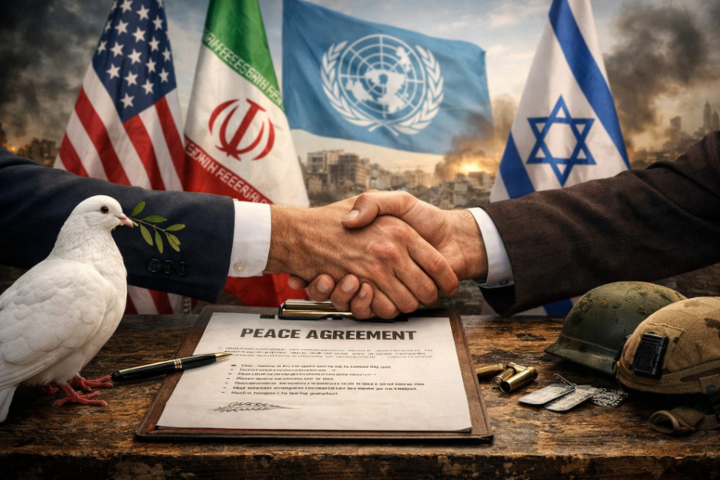
ROADMAP FOR RESOLVING THE MIDDLE EAST CRISIS (Proposal by Muhammad Devedjinijat, Chairman of the Coordination Council of Democratic Forces of Turkmenistan) --- Introduction In the context of the escalating crisis in the Middle East, tensions between the Islamic Republic of Iran, the United States of America, and Israel continue to rise. The current situation is characterized by a lack of willingness among the parties to reach a compromise and a high risk of further military escalation. On the one hand, the current authorities in Iran demonstrate a readiness to continue a confrontational policy both domestically and at the regional level. On the other hand, the United States and its allies have expressed their intention to pursue their strategic objectives in the region. Israel, in turn, is taking independent measures aimed at containing Iran’s military and economic capabilities. Countries in the region express serious concern about the current situation and seek a sustainable and long-term resolution to the crisis. In this regard, there is a need to apply comprehensive, primarily peaceful mechanisms for conflict resolution, based on international law and the participation of civil society. --- Key Mechanisms Mechanism 1: Creating conditions for the participation of the Iranian people in determining the future of their country and resolving the current crisis. Mechanism 2: Utilizing international legal mechanisms and institutions to de-escalate the conflict. --- Initiative It is proposed to urgently convene a meeting of the United Nations Security Council to review and consider this roadmap. --- Settlement Plan 1. Immediate establishment of a six-month ceasefire between Iran, the United States, and Israel; 2. Cessation of any attacks by Iran on neighboring countries; 3. Ensuring freedom of navigation in the Strait of Hormuz; 4. Suspension of uranium enrichment and all nuclear activities in Iran during the six-month period, followed by international monitoring; 5. Termination of support for proxy armed groups in the region; 6. Suspension of the missile program for the duration of the agreement; 7. Ensuring full internet freedom for the people of Iran; 8. Introduction of a moratorium on the death penalty; 9. Release of political prisoners; 10. Ensuring uninterrupted import of food and humanitarian supplies under international supervision; 11. Establishment of an independent international commission under the UN Human Rights Council to prepare a referendum; 12. Development of security guarantee mechanisms for civil servants and members of security forces during transitional processes. --- Referendum Committee The Committee shall be established with international participation and under UN supervision. Main responsibilities: 1. Determining the date of the referendum (within five months); 2. Preparing and approving the referendum questions. --- Proposed Referendum Questions 1. Do you support the continuation of Iran’s nuclear program? 2. Do you support Iran’s involvement in supporting armed groups abroad? 3. Do you support the continuation of the missile program? 4. Do you support maintaining the current political system (Islamic Republic)? 5. Do you support the continuation of a confrontational policy toward the United States? 6. Do you support determining the future system of government in Iran through a free and internationally supervised referendum with the participation of all citizens, including the diaspora? --- Conclusion This roadmap is aimed at preventing further escalation, protecting human rights, and creating conditions for a peaceful and sustainable future in the region. Its implementation would enable all parties to shift from confrontation to dialogue based on international law, the will of the people, and principles of security and stability.
As a foundation, every individual's fundamental
protect and develop their rights
we are working for.