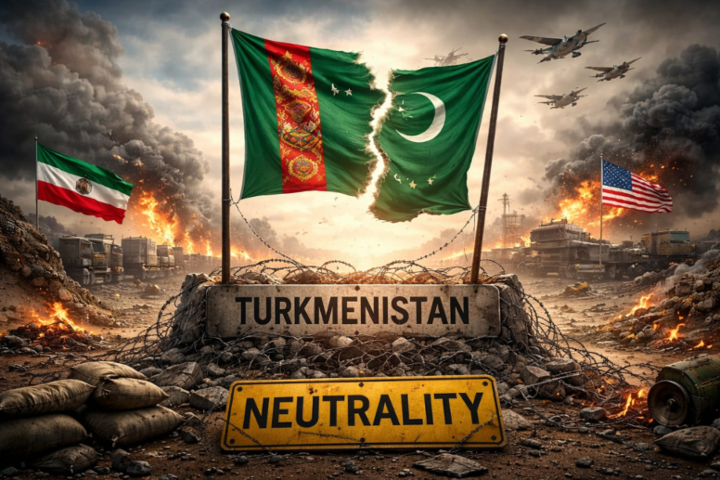
Neutrality Under Question: What Could Regional Tensions Mean for Turkmenistan? The Armed Forces of Turkmenistan have issued an official statement denying reports that U.S. military aircraft landed on the country’s territory. According to the statement, such information is false and does not correspond to reality. However, in a context where the authorities of Turkmenistan consistently deny serious internal issues — including the economic crisis, the dual exchange rate of the dollar, rising prices, and systematic human rights violations — it is natural for citizens to question the credibility of official statements. The Iran Factor: Economic Dependence Turkmenistan is geographically and economically closely connected to Iran. A significant portion of cargo transportation, transit routes, and the supply of essential goods passes through Iranian territory or comes directly from Iran. In the event of diplomatic tension or deterioration of relations, the first to feel the consequences would be ordinary citizens: possible increases in food and basic goods prices; disruptions in supply chains; higher transportation costs; growing economic instability. Given the existing challenges — limited access to foreign currency, import restrictions, and declining purchasing power — any external conflict could further aggravate the country’s internal socio-economic difficulties. Risks of Regional Escalation We sincerely hope that Iran will not interpret the situation as a hostile gesture or an act of “betrayal” and will not respond with force. Any military or political escalation in the region would have serious negative consequences for Turkmenistan, considering its economic vulnerability and limited channels of transparent public diplomacy. Neutral Status: Principle or Formality? Turkmenistan is officially recognized as a neutral state. This status implies: non-involvement in military conflicts; refusal to host foreign military bases; prohibition of using its territory for military purposes by third countries. If public information raises doubts about compliance with these principles, citizens have legitimate reasons for concern. Neutrality is not only a matter of international image — it is a guarantee of national security and stability for the people. Absence of Public Dialogue Particularly alarming is the lack of meaningful dialogue between the state and society in Turkmenistan. Strategic decisions are made by a narrow circle of individuals, while citizens are deprived of transparent information and the opportunity to participate in discussions on issues of national security and foreign policy. When critical decisions are made without public oversight or explanation, distrust inevitably grows. Position of the Human Rights Platform “DAYANÇ / Turkmenistan” We believe that: national security must be ensured strictly within the framework of international law and the principle of neutrality; any actions that could draw Turkmenistan into regional conflicts are unacceptable; economic stability and citizens’ well-being must remain a priority; the authorities must ensure transparency and openness in matters of national security; society has the right to know the truth and to participate in discussions on strategically important decisions. Today, it is especially important to preserve peace, stability, and genuine guarantees of neutrality — not only on paper, but in practice. Without public trust, there can be no sustainable state. Without transparency, there can be no real security. Without dialogue, national unity cannot be preserved. Human Rights Platform of the Civic Movement “DAYANÇ / Turkmenistan”
As a foundation, every individual's fundamental
protect and develop their rights
we are working for.