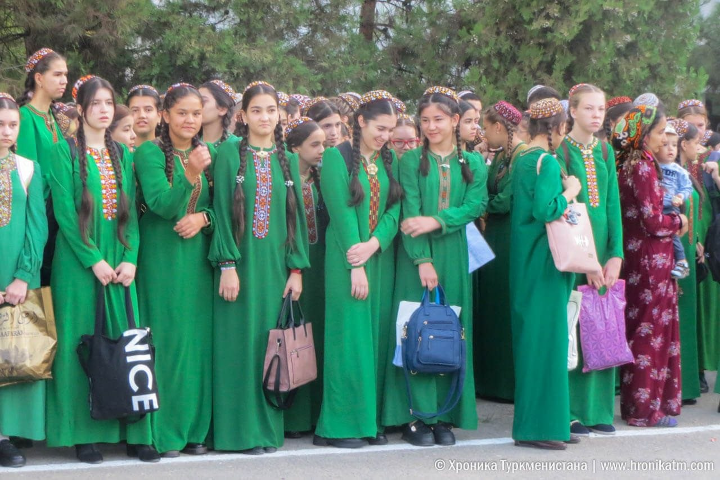
Gynecological Examinations of Schoolgirls in Turkmenistan: Protecting Health Cannot Be Achieved Through Coercion, Humiliation, and Intrusion into Private Life Statement by the Dayanç Civil Human Rights Platform / Turkmenistan 19 September 2026 On 18 September 2026, Radio Azatlyk’s Turkmen Service reported that gynecological examinations were being conducted on senior schoolgirls in Mary Region. According to the report, some examinations are being carried out without prior notice, while parents are not informed in advance. It was also reported that some girls are required to undergo additional medical tests, including HIV testing. If these reports are confirmed, this is not merely a matter of a controversial medical practice. It raises serious concerns regarding children’s rights to dignity, bodily integrity, privacy, confidentiality of medical information, and protection from degrading treatment. The Dayanç Civil Human Rights Platform / Turkmenistan considers such practices unacceptable if examinations are conducted without proper information, appropriate consent procedures, and guarantees of confidentiality, or if they are used to determine so-called “virginity.” We have repeatedly raised concerns regarding violence against women and girls, the lack of adequate support mechanisms for survivors, and the need for hotlines, crisis centres, and comprehensive education for children and adolescents. Today, we are once again compelled to ask: why does the state continue to choose a system of control instead of building a system of protection? Where Are Prevention and Protection? If the state is genuinely concerned about adolescent health, HIV, teenage pregnancy, sexual violence, and the sexual exploitation of minors, an entirely different set of measures is required. Where is age-appropriate education on reproductive health, personal boundaries, consent, contraception, sexually transmitted infections, and protection from sexual violence? Where are accessible and confidential hotlines where a child can say: “I am being forced.” “I am being threatened.” “Someone is touching me against my will.” “I am afraid.” Where are the crisis centres for girls and women? Where are trained psychologists and social workers? Where are safe mechanisms for reporting domestic and sexual violence? Where are effective investigations into the sexual exploitation of minors? And where is accountability for adults when a minor becomes a victim of sexual exploitation or violence? Why, instead of addressing these questions, does the girl’s body once again become the object of control? “Virginity Testing” Is Not a Medical Diagnosis Reports that gynecological examinations may be used to determine whether a girl has had sexual intercourse are particularly alarming. The World Health Organization, together with the Office of the United Nations High Commissioner for Human Rights and UN Women, has opposed so-called virginity testing. The appearance of the hymen cannot reliably establish whether a girl or woman has previously had sexual intercourse, and such examinations have no scientific or clinical basis for determining “virginity.” Therefore, using medical examinations to assess a girl’s supposed “moral purity” cannot be presented as legitimate medical prevention or healthcare. The consequences of such practices may be particularly severe in a traditional society, where information—or even rumours—about a girl’s sexual life can lead to stigma, family conflict, psychological pressure, and social condemnation. This requires the state to exercise greater caution and stronger protection of confidentiality, not greater intrusion. The right to dignity and bodily integrity belongs to every girl, regardless of her background, religion, family circumstances, or presumed sexual history. If There Is Sexual Violence, Investigate the Perpetrator — Do Not Look for “Guilt” in the Girl The situation is particularly serious when minors may have been subjected to sexual violence, exploitation, coercion, or sexual activity arising from severe economic vulnerability. If there are grounds to suspect that a child is being sexually exploited, the authorities should first establish: Is the child safe? Is anyone forcing her into sexual activity? Is she being subjected to violence, threats, or blackmail? Is an adult exploiting the minor? Does she need medical, psychological, social, or legal assistance? The state’s first question should not be: “Are you a virgin?” The first question should be: “Do you need help? Are you safe?” This is the fundamental difference between protecting a child and controlling a child. HIV Testing Must Not Become an Instrument of Pressure HIV prevention is essential. Timely diagnosis and treatment save lives. However, medical testing must not be used as a punishment or a mark of shame attached to a teenager’s presumed sexual activity. When working with children, appropriate information and consent procedures must be ensured in accordance with their age and applicable law, together with confidentiality, counselling, accurate results, and access to necessary medical care. A child’s medical information must not become a subject of discussion at school, public condemnation, or pressure. Inspections Cannot Replace Public Policy The Dayanç Civil Human Rights Platform has previously drawn attention to the need for an effective system in Turkmenistan to prevent violence against women and children. We reiterate: Inspections cannot replace prevention. Fear cannot replace education. Humiliation cannot replace healthcare. Control cannot replace protection. Intrusion into a child’s intimate life cannot replace the fight against sexual violence. Accessible hotlines are needed. Crisis centres are needed. Schools need psychologists and trained professionals whom children can genuinely trust. Children and adolescents need age-appropriate education on health, safety, consent, and personal boundaries. There must be clear and safe mechanisms for reporting violence. Victims need genuine assistance. And allegations against perpetrators and exploiters must be properly investigated instead of searching for “moral guilt” in an underage girl. Appeal to International Organizations The Dayanç Civil Human Rights Platform / Turkmenistan draws the attention of UNICEF, the World Health Organization (WHO), UNFPA, UN Women, the Office of the United Nations High Commissioner for Human Rights (OHCHR), as well as the relevant UN Special Procedures, to reports of such practices. We believe that the authorities of Turkmenistan should be asked to clarify: What is the legal and medical basis for these examinations? Which state authorities ordered them? How many schools and minors are affected? How are children and parents informed, and how is their participation and consent handled? How is medical confidentiality protected? Who has access to the results? Are there consequences for refusing an examination? Are any examinations being conducted for the purpose of determining so-called “virginity”? If such a practice exists, we call on international organizations and human rights mechanisms to urge its termination. At the same time, we call upon international organizations to support the development of genuine mechanisms for preventing violence and protecting children in Turkmenistan, including confidential hotlines, crisis centres, psychological assistance, safe complaint mechanisms, and appropriate educational programmes. Appeal to Parents and Schoolgirls in Turkmenistan We address a separate appeal to parents and to the girls themselves. If you or your daughter are being referred for such an examination; if its purpose and grounds are not properly explained to you; if an examination is being conducted against your will; if you are being pressured for refusing; if you are required to undergo a so-called “virginity test”; or if medical tests are demanded and you fear that the results may be disclosed — you may contact the Dayanç Civil Human Rights Platform. If you believe that what is happening violates your rights, please tell us about it. We can document your testimony confidentially and, with your consent, use anonymized information in communications with relevant international human rights and specialized organizations. When contacting us, it would be helpful to provide the region and school, the child’s age, who ordered the examination, how its purpose was explained, whether consent was requested, what happened in the event of refusal, what tests were required, and to whom the results were subsequently disclosed. If you are concerned about your safety, you do not need to provide your surname, school number, or any other identifying information in your initial communication. Parents have the right to ask questions about what is happening to their children. And a girl should not be forced into silence simply because adults call what is happening an “examination.” If you are frightened, humiliated, or feel that you are being pressured — contact us. We will handle such reports with particular care and confidentiality. Contact Us Dayanç Civil Human Rights Platform / Turkmenistan 🌐 http://dayanchcivil.com/ Diana Dadasheva Chair, Dayanç Civil Human Rights Platform / Turkmenistan France 19 September 2026 A child’s health cannot be protected through humiliation. Violence cannot be prevented by violating the dignity and privacy of those who may be at risk. The state must protect girls — not subject their “morality” to examination.
As a foundation, every individual's fundamental
protect and develop their rights
we are working for.