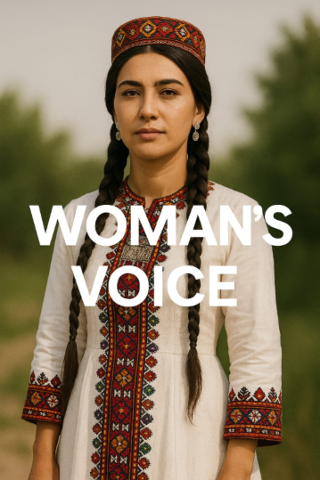
There are people who live quietly in the shadows of major events — and it is often from those shadows that a force capable of shaking the world is born. Gülala Hasanova is one of those women. Her face may appear fragile, her hands worn by the weight of life, but in her heart burns a fire ignited by life itself. Whenever people speak of “strong authority” or “perfect power,” it is her image that comes to mind: a woman who did not choose to be strong, but was forced to become so. Her story was not written for heroic epics or newspaper headlines. It is the story of how ordinary life turns vulnerability into strength. When you have four children and no husband by your side; when the only thought in the morning and the only prayer at night is to bring your loved one home alive, days stop being divided into “good” and “bad.” Every day becomes a struggle, every night a vigil at the window of hope. Gülala carries everything on her shoulders: financial hardship, the responsibility for her children, humiliation, pain — and most of all, the endless search for the person taken from her. Behind this visible resilience lies a deep ocean of suffering: tears, sleepless nights, loneliness, nervous breakdowns, constant stress, and a crushing sense of betrayal. These things never appear in official documents, yet they shape a person’s character. People often say, “It’s just the times we live in.” No. It is not the time. It is people — and a system of false values, where crime is rewarded, lies are glorified, and honesty is mocked. The authority that should protect the people appears to her not as a shield, but as a destructive force. Bans on speech, thought, and freedom are not order — they are a form of torture. Life becomes a cage: without a voice, without a future, without human dignity. When everything meaningful is taken from people — their loved ones, their homes, their sense of safety — they either break, or they develop a new form of strength. Gülala chose the latter. Women who have nothing left to lose are especially frightening to unjust systems. They have no privileges to protect, no careers to preserve, no reputations to fear for. What they have are children, memory, and truth. Their anger is justified — not to destroy, but to restore justice and dignity. They understand the price of loss and are therefore ready to walk to the very end, because the enemy standing before them has already taken everything. Gülala is a mirror of a country where speaking out loud is still dangerous. Yet her silence is a challenge. Her loneliness is a collective scream. She is proof that oppression does not produce obedience — it produces resistance. The harder they tried to break her, the stronger her will became. The thought that “the world is silent” is painful. Yes, the world often turns away from the tragedies of those deemed “far away.” But silence does not equal weakness. It can be confronted with words, actions, and truth. Gülala is no longer alone: there are people around her who see and understand. And the number of such women is growing. This growth frightens the system — yet within it lies hope: a people’s strength born from pain always finds a path toward the light. Gülala, stay strong. Your story is not merely a personal tragedy — it is an appeal to conscience. We see you not as a victim, but as a woman who challenges a system that has lost its humanity. A woman with nothing left to lose — and that makes you dangerous to those who thrive on fear and impunity. We promise: we will not forget. We will remember, speak, demand, search, and deny those who wish to keep the truth in the shadows any peace. Let their policies and bureaucratic machines try to turn human lives into statistics. Let them mock honesty and call kindness weakness. History tells a different story. Societies are led out of darkness not by grand slogans, but by the resilience of ordinary people — by their sense of responsibility and their unextinguished love. And if today Gülala is a symbol of pain and loss, tomorrow she can become a symbol of shared victory. Because behind her stand children, memory, and truth. And we stand with her. Because we, too, have nothing left to lose.
As a foundation, every individual's fundamental
protect and develop their rights
we are working for.