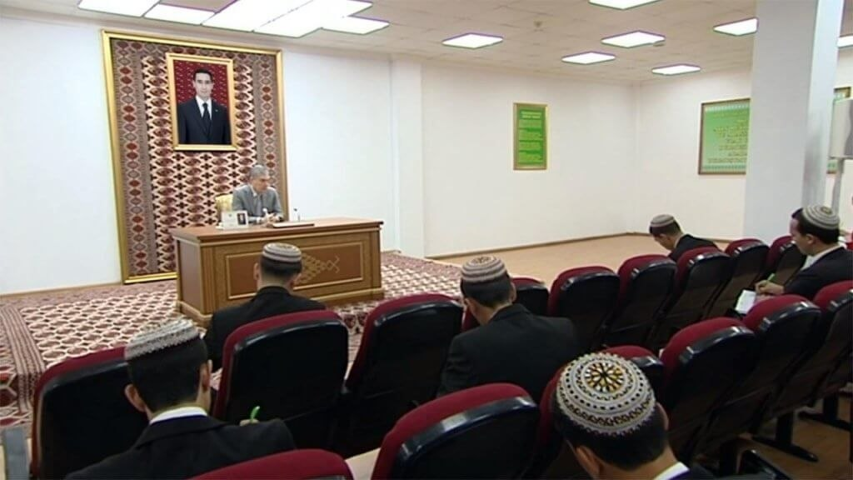
“A Smart Society” Without a Free Internet: Turkmenistan Is Building a Digital Future with the Lights Off Turkmenistan is once again talking about the future. At a meeting with young people in Arkadag, Gurbanguly Berdimuhamedov called for the development of artificial intelligence, start-ups, international educational clusters and a “smart society.” At the same time, young people were warned against “alien views and false values in the online environment.” It is almost the perfect formula for Turkmenistan’s digitalisation: think boldly — just not too independently. Use the internet — but not all of it. Create innovations — but first make sure they are ideologically acceptable. Nezavisimaya Gazeta aptly described what is happening as Turkmenistan sliding onto the “digital sidelines.” But the problem goes far beyond technology. Internet restrictions in Turkmenistan are, first and foremost, a human rights issue. Artificial Intelligence Without Access to Information How exactly is Turkmenistan supposed to create start-ups, develop AI and train internationally competitive specialists when a significant part of the global internet is inaccessible and users are constantly forced to search for ways around online restrictions? Modern technology cannot develop in a digital vacuum. It requires access to international scientific resources, software platforms, professional communities, the free exchange of knowledge, and the freedom to debate, research and make mistakes. You cannot build a “smart society” after first deciding for society what information it is allowed to see and which ideas it is permitted to consider acceptable. The vague warning about “alien views” is particularly revealing. Who decides which views are “alien”? Where are the legal criteria? Where is the possibility of challenging a website block? Where is an independent court? When definitions are deliberately vague, they become convenient instruments for arbitrary restrictions on information and dissent. The Internet Is Not a Gift from the State Access to the internet is directly connected to the freedom to seek, receive and impart information and ideas. These principles are protected, among other provisions, by Article 19 of the International Covenant on Civil and Political Rights. Of course, the internet is not a lawless space. States may legitimately combat cybercrime, child exploitation, fraud and other genuine threats. But there is an enormous difference between targeted, lawful and necessary restrictions and a system in which the state effectively decides which part of the world millions of citizens are permitted to see. Internet blocking also affects education, scientific research, entrepreneurship, professional development and citizens’ ability to access independent media and human rights resources. Digital isolation is therefore part of a much broader problem concerning fundamental freedoms. Young People Are Offered a Future — Without the Right to Choose It Themselves There is a particularly bitter irony in calling on young people to generate “bold ideas.” A bold idea begins with the freedom to ask uncomfortable questions. Innovation emerges where a student can challenge a teacher, a researcher can criticise a government programme, a journalist can verify an official statement, and a young person can open a foreign website without feeling as though they are doing something suspicious. If the state genuinely wants educated, technologically skilled and enterprising citizens, it must stop treating independently minded people as potential threats. You cannot demand creativity while punishing independence of thought. The Most Important Modernisation Is Not Another “Smart City” Another impressive city can be built. Sensors, cameras and digital screens can be installed. Another technological concept can be announced. But a “smart society” is not defined by the amount of electronics it possesses. It begins with people and their rights. Open the internet. Ensure genuine access to international educational and scientific resources. Stop suppressing independent sources of information. Establish transparent rules for blocking online resources and provide meaningful access to judicial review. Guarantee academic freedom and young people’s right to seek information independently. Then perhaps artificial intelligence, start-ups and the digital economy will cease to be attractive words delivered from a podium and become a genuine development strategy. For now, however, Turkmenistan is left with a peculiar technological paradox: the authorities want to build a “smart society,” yet they still appear to fear a society that starts thinking for itself. Source: Nezavisimaya Gazeta, “Turkmenistan Is Sliding onto the Digital Sidelines,” 6 September 2026.
As a foundation, every individual's fundamental
protect and develop their rights
we are working for.