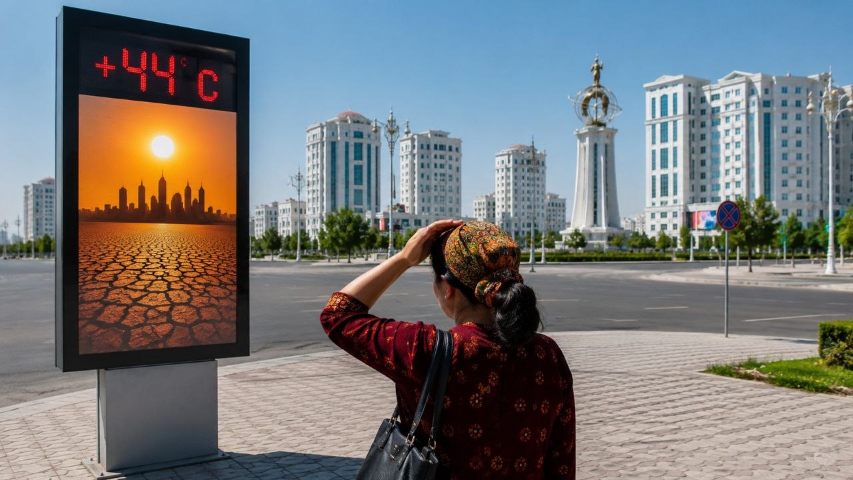
Ashgabat Melts in Extreme Heat: Record Temperatures Expose Turkmenistan's Energy Infrastructure Crisis An unprecedented heatwave has gripped Turkmenistan, severely affecting the daily lives of its residents. According to Azatlyk Radiosy, air temperatures in Ashgabat have reached 41–44°C, while the perceived temperature in some areas is as high as 46°C. Meteorologists warn that temperatures in parts of the country could approach 49°C in the coming days. However, the extreme heat has exposed a much deeper and long-standing problem: the deteriorating state of Turkmenistan's electricity infrastructure. According to residents of Ashgabat, the power supply has become increasingly unstable during the heatwave. In many neighborhoods, voltage levels have dropped so significantly that air conditioners, fans, and refrigerators either function poorly or stop working altogether. People are resorting to soaking their clothes in water, sleeping in wet garments, leaving doors and windows open throughout the night, or spending time outdoors in an attempt to cope with the extreme temperatures. Residents living in private houses have also begun watering their yards to reduce the surrounding temperature. Many report that even owning an air conditioner no longer guarantees relief because of the persistent electricity problems. Power outages are becoming a systemic problem The situation is particularly severe in newly developed residential districts of Ashgabat and surrounding suburban areas. According to local residents, electricity voltage is too low to operate household appliances properly. Authorities have reportedly warned residents that it will not be possible to provide a stable electricity supply to all neighborhoods throughout the summer. At the same time, residents note that reliable electricity service is maintained primarily in the city center, where the Presidential Palace, government ministries, and other key state institutions are located. As confidence in the national power grid declines, many families are purchasing private electricity generators despite their high cost, which ranges from 2,000 to 20,000 manat. The crisis extends beyond the capital According to Azatlyk Radiosy, the consequences of the extreme heat are being felt across Turkmenistan. In Mary Province, local sources report: people losing consciousness due to the heat; daytime power outages in markets; vendors being forced to close their shops; drivers reporting vehicle overheating and damage to road surfaces; farmers describing the negative impact of the heat on livestock. In kindergartens, caregivers reportedly cool children by pouring water over them to prevent overheating, while hospitals have had to rely on backup generators to keep intensive care units functioning during electricity outages. Earlier reports also indicated that bus services in Lebap Province were temporarily suspended because extreme temperatures caused frequent mechanical failures and accelerated wear on vehicles. Engineers point to aging infrastructure Energy specialists interviewed by the outlet argue that the current crisis is not simply the result of increased electricity consumption. According to them, much of Turkmenistan's power transmission network has not been adequately modernized for years. During periods of extreme heat, electrical conductors overheat, their electrical resistance increases, reducing transmission capacity and causing voltage drops across the network. In other words, the heatwave has merely exposed structural weaknesses that have accumulated over many years. A stark contrast between official narratives and everyday reality For years, Turkmenistan's state media have regularly highlighted large-scale modernization projects, new construction, and the development of modern infrastructure. However, reports from independent sources suggest that many residents continue to experience serious electricity shortages precisely during the periods when reliable power is most essential. The ongoing heatwave has become more than a climatic challenge—it has also become a test of the country's infrastructure. Reports emerging from different regions indicate that this test has revealed significant systemic deficiencies directly affecting public safety, health, and the quality of life of Turkmenistan's citizens. Source: Azatlyk Radiosy (Azathabar), 14 July 2026. https://www.azathabar.com/a/asgabatda-adatdan-dasary-yssy-howa-ne-adamlar-ne-de-elektrik-enjamlary-cydayar/33803290.html
As a foundation, every individual's fundamental
protect and develop their rights
we are working for.