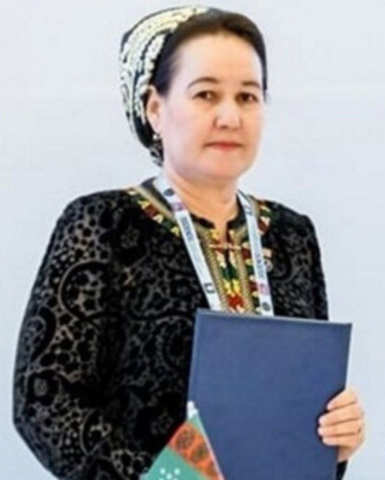
An Ombudsman Without Protection: Only 6% of Citizens’ Complaints Are Resolved in Turkmenistan Turkmenistan officially declares that human rights and freedoms are the highest value of the state. However, even the official statistics of the Human Rights Ombudsman demonstrate the opposite: in 2025, only 6% of written complaints submitted by citizens were resolved — just 28 out of 475. In other words, out of every one hundred people seeking protection, only six received actual assistance. The rest either received recommendations to defend their rights on their own or saw their complaints redirected to the very same state institutions against which they had originally complained. Particularly revealing is the fact that the number of complaints continues to increase. Written appeals have grown, and oral complaints have increased as well. This does not indicate “legal stability,” but rather growing desperation among citizens who are trying to find at least some official mechanism capable of protecting their rights. The report mentions housing problems, court decisions, land disputes, complaints against law enforcement agencies, migration issues, private sector disputes, healthcare, education, and social protection. At the same time, it says almost nothing about the most fundamental issues: freedom of speech, political rights, persecution of civic activists, censorship, fear, the suppression of independent journalism, and the impossibility of openly criticizing the authorities. The regional statistics are especially alarming. A large number of complaints came from the Lebap, Dashoguz, and Mary regions. This may indicate not only the scale of existing problems, but also the depth of social depression in these regions, where people have faced poverty, unemployment, corruption, and lack of access to justice for years. In practice, the institution of the Ombudsman in Turkmenistan appears not as an independent mechanism for protecting citizens, but as a decorative structure that records complaints, formally forwards letters to government agencies, and publishes statistics. When only 6% of complaints are resolved, the central question becomes unavoidable: whom does this institution actually protect — citizens or the state system itself? The situation becomes even more absurd when complaints concern law enforcement agencies and court decisions. If a citizen complains about the security apparatus, but the complaint remains within the same state hierarchy, it is impossible to speak about independent protection. Under such conditions, individuals are left alone against a system in which every institution shields the other. The report also mentions an increase in the number of people with disabilities, a decline in the number of first-grade students, employment difficulties, the weakness of the private sector, and cases of fraud. These figures indirectly reveal a much deeper reality: demographic decline, migration outflow, growing social vulnerability, and the destruction of public trust in state institutions. The Ombudsman acknowledges certain problems, yet avoids naming their true causes. There is no discussion of systemic corruption, the absence of an independent judiciary, pressure against citizens, the ban on free media, or the climate of fear surrounding state institutions. For this reason, the report appears not as a genuine human rights document, but rather as a cautious attempt to admit certain difficulties without addressing the foundations of the authoritarian system itself. Legal stability is not about impressive reports or international slogans. It means that a citizen can complain about an official and actually be heard. It means that courts are independent. It means that the police are not a source of fear. It means that women, workers, pensioners, entrepreneurs, students, and activists all have real mechanisms for protecting their rights. Today, even official statistics in Turkmenistan demonstrate that human rights remain not a guarantee, but a rare exception. And when 94% of written complaints fail to result in any meaningful resolution, the problem is not with the citizens who complain. The problem lies within a system that neither knows how nor wishes to protect them. Source: Turkmen.news https://turkmen.news/2026/05/26/pravovaya-stabilnost-v-turkmenistane-udovletvorayetsa-6-obrasheniy-k-ombudsmenu/ Photo taken from the above-mentioned source.
As a foundation, every individual's fundamental
protect and develop their rights
we are working for.