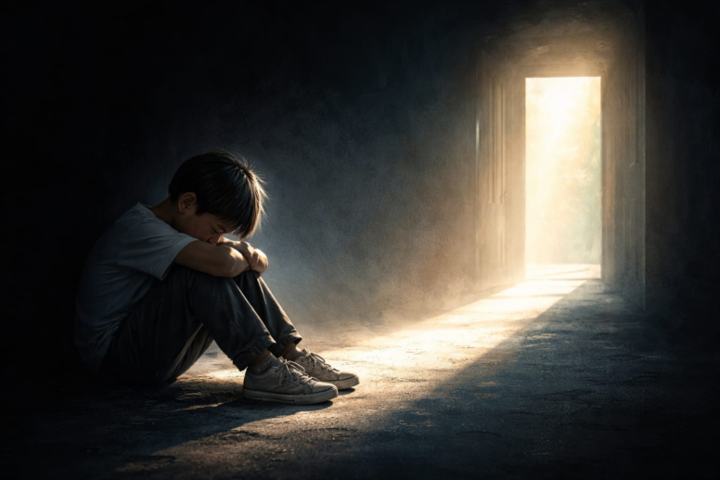
Children and adolescents in Turkmenistan are growing up in conditions of deep social and psychological vulnerability caused by a combination of economic hardship, social instability, and institutional neglect. One of the key contributing factors is the widespread labor migration of parents. Due to economic necessity, thousands of citizens of Turkmenistan are forced to leave the country in search of employment, leaving their children behind without consistent parental care and emotional support. As a result, many children grow up in emotional isolation, without stability or a sense of protection. Separation from parents during formative years can have severe consequences for a child’s psychological development. The absence of emotional support, guidance, and security significantly increases the risk of depression, anxiety, and feelings of abandonment. Despite the seriousness of the situation, Turkmenistan lacks an effective and accessible system of psychological support for children and adolescents. While school psychologists formally exist, in many cases they are unable to provide confidential, professional, and independent assistance. Children often fear that seeking help will lead to exposure, stigma, or administrative consequences. Instead of receiving psychological support, vulnerable adolescents may be subjected to monitoring, questioning, or intervention by authorities. Such responses do not address the root causes of psychological distress and instead contribute to fear, mistrust, and further emotional harm. Economic hardship and social instability further exacerbate the vulnerability of young people. Some adolescents are forced to work instead of attending school. Others lose motivation and hope for the future, feeling trapped in circumstances beyond their control. These conditions significantly increase the risk of exploitation, abuse, and psychological trauma. Educational Environment and Psychological Pressure Educational institutions should provide a safe and supportive environment for children. However, available evidence indicates that many students experience fear, psychological pressure, and an inability to freely express themselves. Children often fear teachers and authority figures. They may be unable to speak openly about their problems, concerns, or emotional distress. An education system based on fear does not foster healthy psychological development. Instead, it suppresses independent thinking, self-confidence, and emotional resilience. A child cannot develop freely in an environment where fear replaces trust and psychological safety. The long-term psychological consequences of such an environment can include depression, emotional withdrawal, loss of motivation, and suicidal ideation. Urgent Need for Independent Crisis Support Centers The Human Rights Platform of the Civic Movement “DAYANÇ” / Turkmenistan calls for the urgent creation of independent crisis support centers for children and adolescents. These centers must serve as safe, confidential, and accessible places where children can seek help without fear of punishment, stigma, or retaliation. Crisis centers must provide: confidential psychological support; assistance to children experiencing depression, trauma, or emotional crisis; protection for children exposed to violence or exploitation; support for children separated from their parents due to labor migration; safe mechanisms for reporting abuse without fear of consequences. Assistance must be real, professional, and child-centered — not merely formal structures that exist only on paper. Children must never face punishment or pressure for seeking help. Protecting children’s mental health is not optional — it is a fundamental obligation of the state. International Legal Obligations Turkmenistan is a party to the United Nations Convention on the Rights of the Child, which guarantees every child the right to protection, safety, and psychological well-being. Turkmenistan is also bound by international human rights treaties that protect the right to life, dignity, health, and protection from harm. The state has a clear obligation to create conditions that protect the mental health and well-being of children and adolescents. Failure to do so places an entire generation at risk. Conclusion Children are the future of any nation. Protecting their mental health, safety, and dignity is essential for the future stability and development of society. The Human Rights Platform of the Civic Movement “DAYANÇ” / Turkmenistan calls on the authorities of Turkmenistan to: recognize the seriousness of this issue; establish independent crisis support centers for children and adolescents; ensure access to confidential psychological care; create safe educational environments free from fear and psychological pressure; protect children from abuse, exploitation, and emotional harm; implement real and effective child protection mechanisms. Ignoring this crisis puts the future of an entire generation at risk. Protecting children is not only a moral responsibility — it is a legal obligation of the state. Source Turkmen.news Turkmenistan — Hidden Leader in Adolescent Suicide in Central Asia https://turkmen.news/turkmenistan-skrytyi-lider-po-podrostkovym-samoubiystvam-v-centralnoy-azii/� https://youtu.be/Mffl0zRnJi0?si=OATAoubKjX1P9aO9
As a foundation, every individual's fundamental
protect and develop their rights
we are working for.